Referral Marketing 101: Benefits, Strategies, and Best Practices

Acquiring new customers without continually increasing your customer acquisition costs (CAC) is a challenge for businesses of every size. Referral marketing offers one way to address it: instead of relying only on paid campaigns, you encourage satisfied customers to recommend your products or services to people they know.
And those recommendations can have a lasting effect. Research published by Harvard Business Review found that referred customers can generate an average of 30–57% more new customers than other customers. The researchers describe this effect as referral contagion: people who join a business through a referral can go on to refer others themselves.
That makes referral marketing particularly interesting for e-commerce businesses, SaaS companies, and other businesses that depend on repeat purchases or long-term customer relationships. A good referral experience can bring in new customers while giving existing customers another reason to engage with your brand.
But how do you turn word of mouth into a repeatable marketing channel? This guide covers what referral marketing is, how it differs from affiliate marketing, its main benefits, and how to build and improve a referral program.
What is referral marketing?
Referral marketing is a strategy that encourages existing customers to recommend a company's products or services to people they know. These recommendations might happen in person, through email, on social media, or using a referral link or code.
Businesses often reward customers for successful referrals. Rewards can include discounts, store credit, cash, free products, upgrades, or exclusive experiences. Some programs also offer an incentive to the person receiving the recommendation.
At its core, referral marketing builds on a simple idea: a recommendation from someone you know can carry more weight than a message from a brand. Rather than asking potential customers to take a company's word for it, referral marketing gives them an opportunity to hear about the product or service from an existing customer.
A referral program makes this process easier to manage. It gives participants a clear way to share, tracks the resulting referrals, and helps the business distribute rewards according to the program's rules.
How does referral marketing work?
A typical customer referral program follows a straightforward process:
- A customer joins the program. An existing customer receives an invitation to participate.
- The customer shares a referral. They send a unique referral link or code to a friend, family member, or colleague.
- A new customer takes action. The referred person visits the business and completes a qualifying action, such as making a purchase or signing up.
- The referral is tracked. The business uses a referral link, code, or another tracking method to attribute the new customer to the person who referred them.
- The reward is issued. Once the referral meets the program's conditions, the relevant participant receives their reward.
The exact process depends on the business and its goals. An e-commerce store might reward completed purchases, while a SaaS company might reward a qualified signup or a customer who remains subscribed for a specified period.
The important thing is to define what counts as a successful referral before launching the program. That way, participants understand the rules and the business can measure results consistently.
The benefits of referral marketing
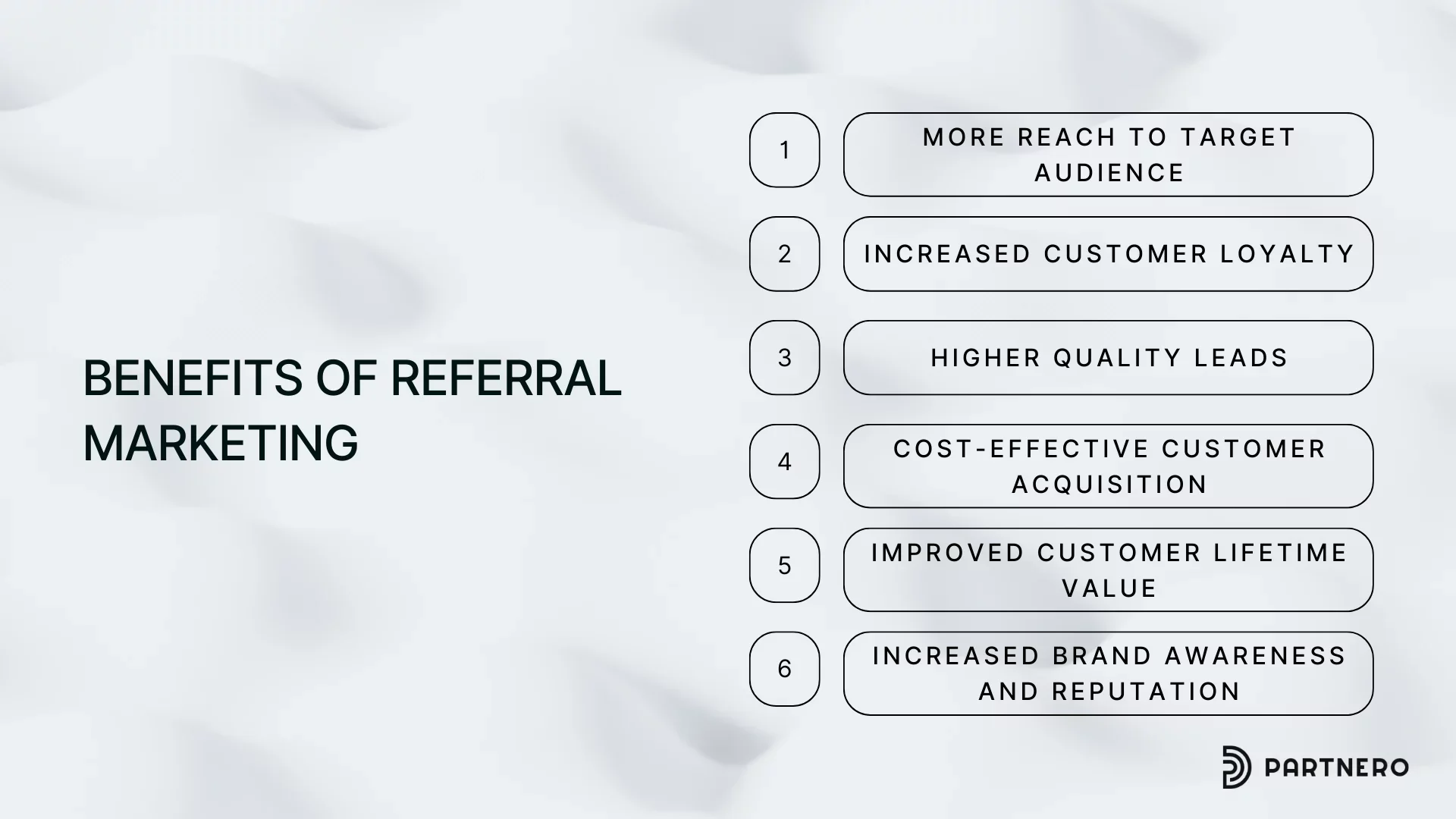
A well-designed referral marketing strategy can benefit businesses of all sizes. Here are six important advantages.
1. Reach more relevant audiences
Your existing customers have their own networks of friends, family members, colleagues, and professional contacts. When they recommend your business, they can introduce it to people who might already have a relevant need or interest.
This can make referrals a useful complement to broader advertising campaigns. Instead of reaching an audience based only on targeting criteria, you can reach potential customers through people who already know your product or service.
2. Build customer loyalty
A referral program gives satisfied customers another reason to engage with your brand. Sharing a recommendation can make customers feel more involved in your business, especially when the program recognises and rewards their contribution.
A positive referral experience can also strengthen the relationship between your brand and the people who participate.
3. Attract higher-quality leads
People who hear about a product from someone they trust may approach the business with a better understanding of what it offers. They may also be more likely to see how the product fits their needs.
That doesn't mean every referred lead will convert. However, referrals can bring in prospects who have already received a personal introduction to your brand.
4. Make customer acquisition more cost-effective
Referral marketing can be a cost-effective addition to your acquisition strategy. Instead of paying for every interaction through advertising, you reward customers when they generate a qualifying referral.
A referral program still has costs: rewards, software, administration, and promotion all need to be considered. The goal is to ensure that the value of the customers you acquire justifies those costs.
5. Improve customer lifetime value
Referred customers can contribute value beyond their first purchase. They may return, purchase additional products, or remain customers for longer.
The Harvard Business Review research on referral contagion also highlights another potential benefit: referred customers can become referrers themselves. This creates an opportunity for customer acquisition to build on itself over time.
6. Increase brand awareness and credibility
Every recommendation introduces your brand to someone new. As customers share positive experiences, they help build awareness and communicate what makes your business valuable.
A recommendation is not a substitute for a good product or service, of course. But when customers genuinely enjoy their experience, referral marketing gives them a simple way to tell others about it.
Affiliate marketing vs. Referral marketing: what's the difference?
Affiliate marketing and referral marketing both use third parties to bring new customers to a business. They can also use links, codes, and performance-based rewards. However, the relationships behind the recommendations are different.
Affiliate marketing typically involves people or organisations that promote products to an audience in exchange for a commission or another agreed reward. Affiliates might be creators, publishers, bloggers, or specialist websites. Their audience does not necessarily have a personal relationship with them.
Referral marketing usually relies on existing customers recommending a business to people they know. The recommendation is based on a personal relationship and the referrer's experience with the product or service.
| Referral marketing | Affiliate marketing |
|---|---|---|
Main participants | Existing customers and their networks | Affiliates, publishers, and creators |
Relationship with audience | Often personal | Often audience- or content-based |
Main motivation | Sharing a positive experience and earning a reward | Earning commission or another performance-based reward |
Typical reach | Friends, family, colleagues, and personal networks | Readers, followers, subscribers, and other audiences |
Common tracking methods | Referral links and codes | Affiliate links and tracking codes |
Typical rewards | Discounts, credits, gifts, or cash rewards | Commissions or agreed fees |
The two approaches can complement each other. A business might use a referral program to encourage customers to invite friends and an affiliate program to work with creators or publishers who can introduce the brand to a wider audience.
If you're exploring incentives for either type of program, see our guide to partner incentives and strategies that boost collaboration, loyalty, and sales.
How to implement a successful referral marketing program
Launching a referral program takes more than choosing a reward and adding a share button to your website. You need a clear goal, a suitable audience, a simple participation process, and a way to measure performance.
Use these seven steps to get started.
1. Define your goals
Start by deciding what you want your referral program to achieve. Your goals will influence the program's structure, incentives, and success metrics.
For example, you might want to:
- Acquire a specific number of new customers.
- Increase sales revenue.
- Encourage more first-time purchases.
- Improve customer retention.
- Increase awareness of a new product or service.
- Generate more qualified leads or signups.
Make your goals measurable and set a timeframe for reviewing them. It's also useful to establish a baseline, such as your current acquisition cost or the number of customers who already arrive through word of mouth.
2. Understand your audience
A referral program should reflect what motivates your customers and how they prefer to communicate.
Consider:
- Who are your most satisfied and engaged customers?
- Which products or services are they most likely to recommend?
- What would make them comfortable sharing your brand?
- Which rewards would they find useful?
- Where are they most likely to share a recommendation?
For example, an online retailer might find that store credit or a discount on a future order is appealing. A SaaS business might find that account upgrades or additional features are more relevant.
You don't have to guess. Customer feedback, surveys, and purchase data can help you understand what participants value.
3. Choose the right referral incentives
Incentives give customers an additional reason to participate. The right reward depends on your business model, margins, customer preferences, and the action you want people to take.
Common options include:
- Discounts on future purchases.
- Cash rewards.
- Store credit.
- Free products or services.
- Product upgrades.
- Exclusive access to new products.
- VIP perks or experiences.
You can use a single-sided incentive, where only the referrer receives a reward, or a double-sided incentive, where both the referrer and the new customer benefit.
Double-sided rewards can make a recommendation feel more inviting because the person sharing it has something valuable to offer their friend. However, they are not automatically the best choice for every business. Consider your margins and the behaviour you want to encourage before deciding.
Whatever reward you choose, explain exactly when it is earned and how it will be delivered.
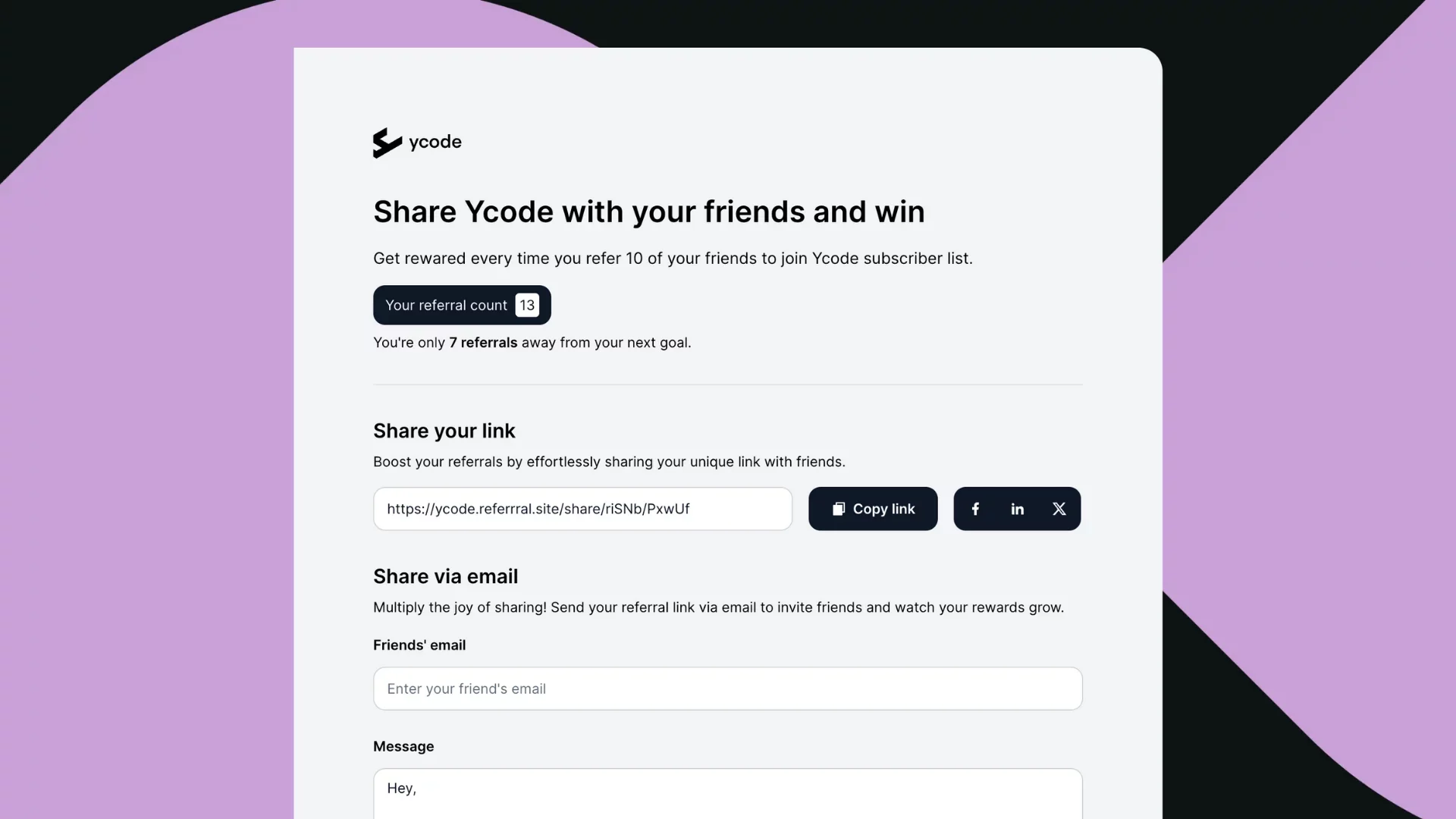
4. Make sharing easy
A complicated referral process can discourage even your happiest customers. Make it simple to understand, quick to complete, and convenient to use on mobile devices.
Consider providing:
- Unique referral links or codes.
- Pre-written messages customers can personalise.
- Email invitation templates.
- A mobile-friendly referral page.
- Easy access to referral progress and rewards.
A dedicated referral portal gives participants a place to find their referral link, share it, and see relevant program information.
With Partnero, you can create a white-label referral portal and use referral tracking to monitor activity and attribute referrals.
5. Promote your referral program
Don't assume customers will discover your referral program on their own. Make it visible across the channels and touchpoints they already use.
Here are some places to promote it:
- Website: Add a referral call to action to relevant pages, such as the homepage, account area, or post-purchase page.
- In-site referral widget: Give customers a convenient way to access your program directly from your website. See how to embed an in-site referral portal widget with Partnero.
- Email marketing: Send a dedicated announcement and include referral reminders in relevant newsletters. Our guide to email marketing tips for newsletter referral programs has more ideas.
- In-app experience: Make your referral program accessible inside your product or customer dashboard.
- Social media: Share program details and explain how customers can participate.
- Customer support and success teams: Help team members recognise appropriate moments to introduce the program to satisfied customers.
- Sales interactions: Consider mentioning the program after a successful purchase or deal, when the customer has a clear reason to recommend your business.
You can also use a combination of these channels rather than relying on a single announcement.
6. Track performance and optimise
A referral program should be reviewed regularly. Tracking helps you understand which parts of the program are working and where customers might be dropping out.
Start with a few key metrics:
- Number of customers participating.
- Number of customers making referrals.
- Number of referred visitors, leads, or signups.
- Number of successful referrals.
- Referral conversion rate.
- Revenue generated by referred customers.
- Cost of rewards and program operation.
Look beyond the total number of referrals. For example, a program might generate many clicks but few purchases. That could indicate that the offer needs improvement, the landing page is unclear, or the audience being reached isn't a good fit.
You should also consider the longer-term value of referred customers, rather than measuring success only by their first transaction.
For a more detailed breakdown, explore our guide to 15 essential referral program metrics to improve ROI.
7. Deliver an excellent customer experience
A referral program can encourage people to talk about your business, but the customer experience gives them something worth sharing.
Make sure the experience is consistent throughout the customer journey: from discovering your brand and making a purchase to receiving the product, using the service, and contacting support.
Pay particular attention to the experience of referred customers. They should understand the offer they received, know what to expect next, and be able to get help if they need it.
A referral is the beginning of a customer relationship, not the end of a marketing campaign.
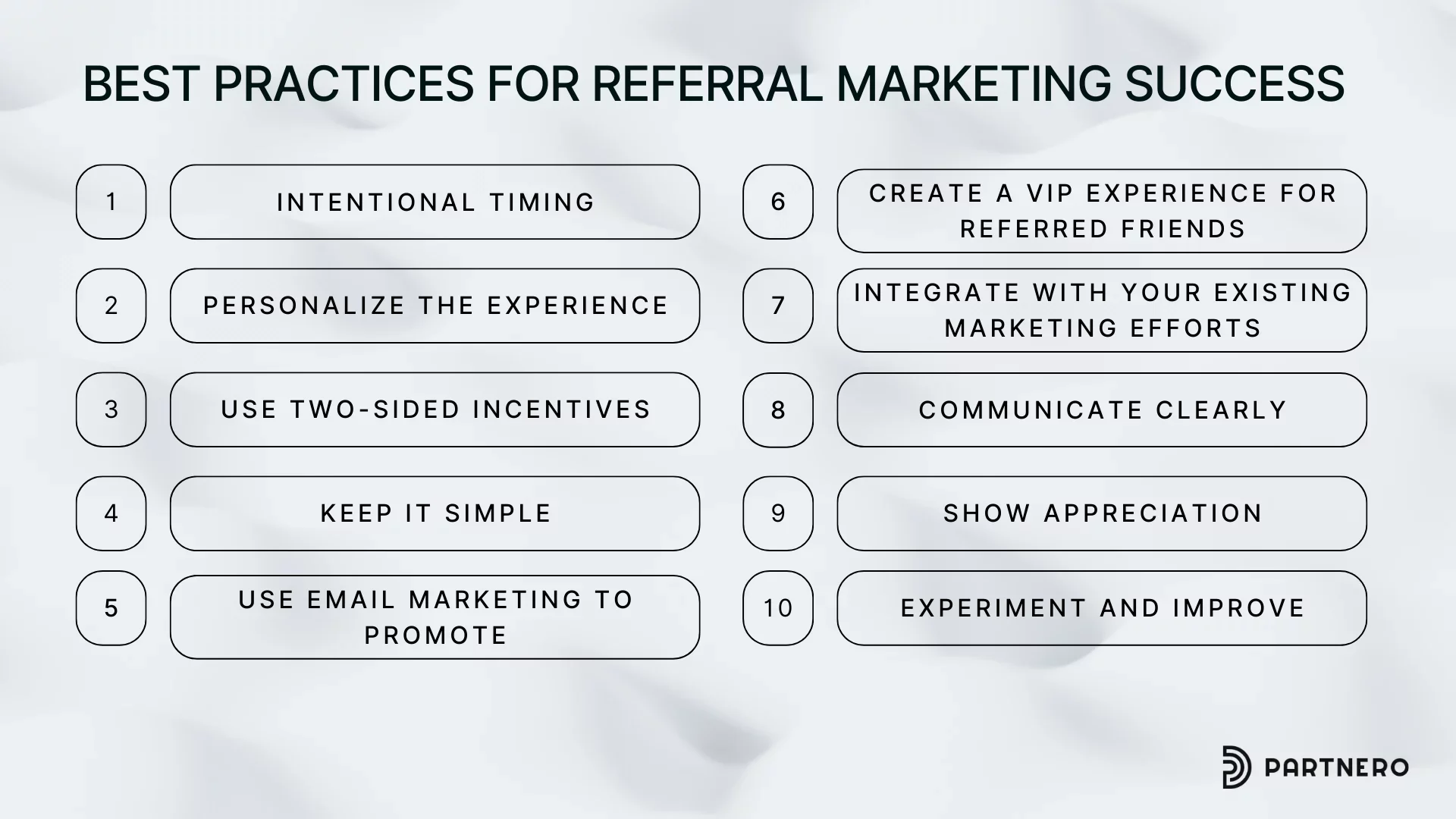
Referral marketing best practices
Once your program is in place, these practices can help you improve participation and create a better experience for both referrers and new customers.
Ask at the right time
Look for moments when customers have a good reason to recommend your business. This might be after a successful purchase, positive feedback, a product milestone, or a helpful interaction with your support team.
Avoid asking for a referral before customers have had enough time to experience the value of your product or service.
Personalise your messaging
Use language that reflects your audience and the context of their relationship with your business. A message to a long-time customer might differ from one sent to someone who has just completed their first purchase.
Personalisation can also apply to the reward, the channel, and the timing of your invitation.
Consider double-sided rewards
Giving both the referrer and the new customer a benefit can make sharing more appealing. The new customer receives a reason to try your business, while the existing customer is recognised for making the introduction.
Test different reward structures to see what works for your audience and budget.
Keep the rules simple and clear
Participants should be able to understand the program without reading a long list of complicated conditions.
Explain who can participate, what counts as a successful referral, when rewards are issued, and whether any restrictions apply. Make the full terms easy to find.
Use email to stay visible
Email can help you introduce the program, remind customers about it, and explain how to participate. Avoid sending reminders so frequently that they become intrusive.
You can also include a referral call to action in relevant customer communications, such as post-purchase emails or product updates.
Give referred customers a positive welcome
The person receiving a referral should have a smooth experience from the moment they follow the link or enter the code.
Make the offer clear, remove unnecessary steps, and ensure that the landing page reflects the recommendation they received. A relevant welcome or onboarding experience can help turn a referral into a lasting customer relationship.
Integrate referrals into your wider marketing
Referral marketing works best when it is part of the customer journey rather than an isolated campaign. Consider where a referral invitation naturally fits into your website, app, email communications, and customer support interactions.
Thank your advocates
Acknowledge customers who take the time to recommend your business. Deliver rewards promptly, communicate clearly, and show appreciation even when a referral doesn't qualify for a reward.
Test and improve
Experiment with different incentives, messages, sharing channels, and placements. Change one or two elements at a time so you can understand what affects performance.
Common referral marketing challenges and how to overcome them
Referral marketing has plenty of potential, but running a program successfully requires ongoing attention. Here are four common challenges and ways to address them.
1. Low participation rates
If customers aren't joining or sharing your program, start by looking at the experience from their perspective.
Is the program easy to find? Is the reward relevant? Can customers understand the rules quickly? Is the sharing process convenient?
You can address low participation by:
- Making the program more visible.
- Simplifying the steps required to share.
- Testing different incentives.
- Improving the wording of invitations.
- Asking customers what would make the program more appealing.
- Using an in-site widget to make the program easier to access.
2. Fraudulent or ineligible referrals
Referral programs can be vulnerable to abuse. Examples include self-referrals, duplicate accounts, repeated transactions intended to trigger rewards, and automated or bot-generated signups.
To reduce the risk:
- Define eligibility and reward conditions clearly.
- Use referral links or codes to attribute activity.
- Review unusual referral patterns.
- Set reasonable limits where appropriate.
- Verify qualifying actions before issuing rewards.
Referral software can help automate parts of this process. Partnero, for example, offers options to prevent signups from the same or similar email addresses and to help prevent multiple transactions and bot signups.
3. Difficulty measuring ROI
It can be difficult to understand whether a referral program is genuinely profitable if you only count the number of referrals or initial purchases.
Track the costs of rewards and program operation alongside the revenue and longer-term value generated by referred customers. Use consistent attribution methods so you can identify which referrals came from the program.
A referral tracking solution can help bring this information together and reduce the need to manage everything manually. See our guide to referral program metrics and ROI.
4. Legal and privacy considerations
Referral programs may involve personal information, promotional claims, and financial or non-financial incentives. Requirements vary depending on where your business and customers are located.
Make sure your program has clear terms and conditions. Explain how referrals and rewards work, what information is collected, and how that information is used. Review applicable privacy, marketing, and consumer protection requirements with a qualified legal professional.
If you use a third-party platform to manage your program, review its privacy and data processing documentation as part of your assessment. You can also use a clear Terms of Service agreement to communicate program rules.
Referral marketing trends to watch
Referral marketing continues to develop alongside changes in customer behaviour and technology. A few areas are worth keeping an eye on.
- More sharing channels: Customers may discover and share recommendations through social networks, messaging apps, communities, and private channels. Programs should make sharing convenient wherever customers communicate.
- More connected partner programs: Businesses may bring referral and affiliate activity closer together, using different program structures to support customers, creators, and other partners.
- More attention to attribution: As customers interact with brands across multiple channels, businesses need clearer ways to understand where referrals originate and which actions lead to conversions.
- More personalised experiences: Automation and AI-powered tools may help businesses tailor messages, offers, and customer journeys. Any personalisation should remain useful, transparent, and respectful of customer data.
- Mobile-first experiences: Referral pages, links, and sharing flows need to work smoothly on smartphones, where many customers browse and communicate.
These are areas to explore, not a checklist every business needs to adopt. Choose the tools and channels that fit your audience and resources.
FAQs about referral marketing
A common example is an online store that gives existing customers a unique referral link. When a friend uses the link to make a qualifying purchase, the existing customer receives store credit and the new customer gets a discount.
A successful referral program has a clear purpose, relevant rewards, simple sharing options, transparent rules, and reliable tracking. It also depends on customers having a positive experience with the business in the first place.
Word-of-mouth marketing describes people sharing opinions and recommendations about a business. Referral marketing is a more structured approach that encourages and tracks those recommendations, often through a formal program with links, codes, or rewards.
Not necessarily. A single-sided reward can work when the main goal is to recognise existing customers. A double-sided reward can give new customers an additional reason to try the business. Test both approaches and compare the results.
Start with participation, referral volume, conversion rate, and revenue. Then account for reward and operating costs to understand ROI. Where possible, measure the longer-term value and retention of referred customers as well.
Yes. Small businesses can start with a simple program and a manageable reward, such as a discount or store credit. The important thing is to make the offer clear, ensure it is financially sustainable, and track whether it brings in valuable customers.
Start referral marketing with Partnero
Referral marketing can help businesses reach new audiences, strengthen customer relationships, and create an additional source of customer acquisition. The strongest programs make it easy for satisfied customers to share their experiences and give new customers a positive reason to try the business.
To get the most from your program, set clear goals, choose rewards that make sense for your audience, promote the program across relevant touchpoints, and keep improving it based on performance.
Referral marketing software can make the process easier to manage. With Partnero, you can:
- Create a white-label referral portal.
- Integrate with e-commerce platforms such as Shopify and WooCommerce.
- Generate unique referral links.
- Track referrals and referral activity.
- Communicate with program participants.
- Monitor key performance indicators.
Explore Partnero's referral program features and referral tracking capabilities to see how you can manage your program.
Ready to turn customer recommendations into a growth channel? Try Partnero.
Launch your program in minutes or get in touch for advanced setups.
Fast setup & easy migration
Connect Partnero to your tools, with support if you’re switching platforms.Automated, transparent payouts
Pay partners on schedule and save hours. No spreadsheets or manual errors.
Affiliate and referral program software trusted by 1,500+ businesses. Connect with Stripe, Paddle, Shopify and more.


Product updates, affiliate marketing tips, and growth insights.