How to Create an Affiliate Program Page That Attracts the Right Partners
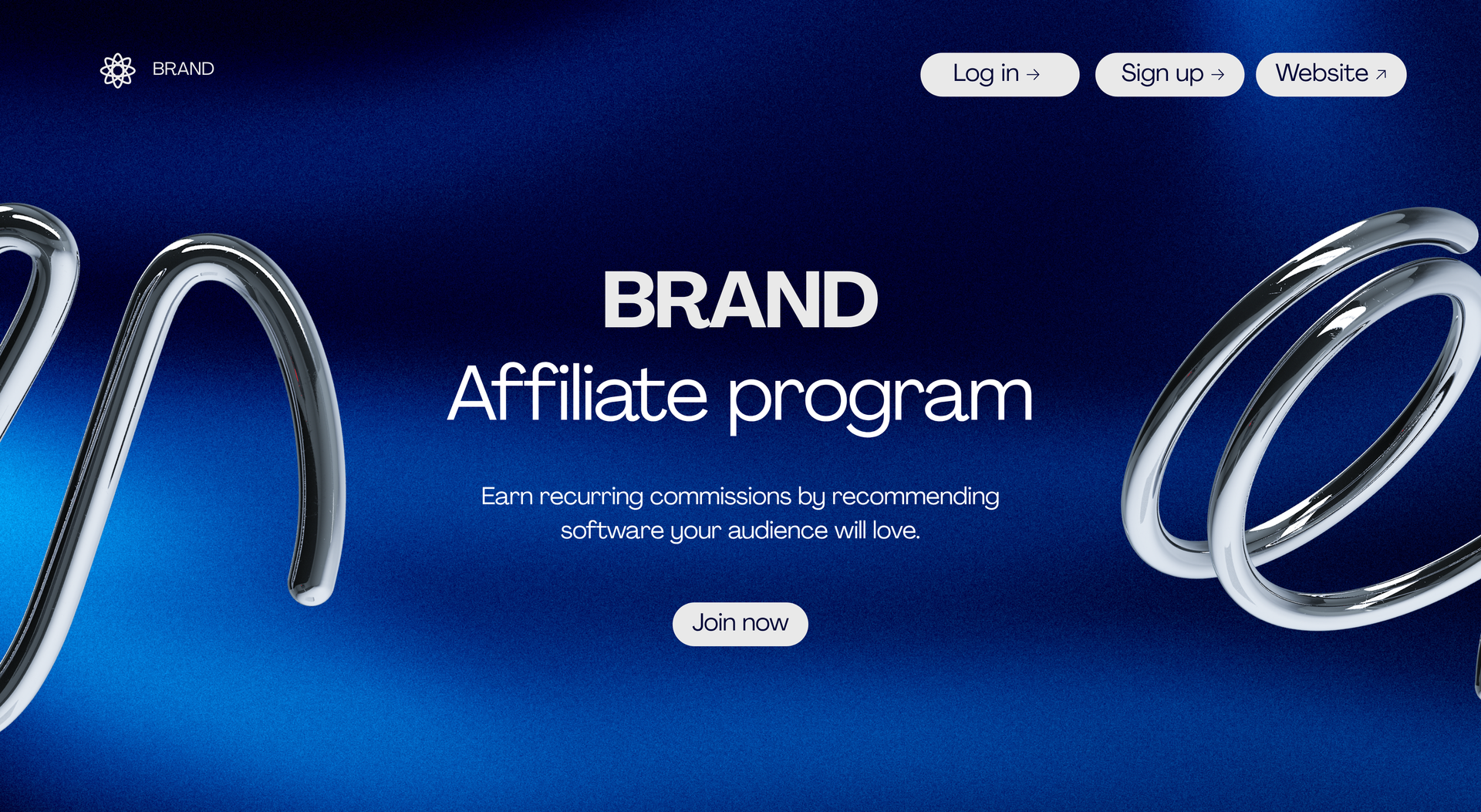
Launching an affiliate program is one thing. Getting the right people to join it is another. Even if you have a great product and competitive commissions, potential affiliates need a reason to choose your program over the many others available.
That's where a well-designed affiliate program page comes in. It's often the first place potential partners go to learn about your offer, understand how they can earn, and decide whether your program is a good fit for their audience.
A good affiliate program page does more than announce that you're looking for affiliates. It communicates the value of your program, answers important questions, builds trust, and makes joining straightforward.
In this guide, we'll look at what an effective affiliate program page should include, how to make it appealing to potential partners, and how to create one with Partnero.
What is an affiliate program page?
An affiliate program page is a dedicated landing page that introduces your affiliate program to potential partners and encourages them to sign up.
Think of it as a recruitment page for your affiliate program. Instead of trying to convince customers to buy your product, you're convincing content creators, publishers, influencers, bloggers, and other potential partners to promote it.
The page should answer a few essential questions:
- What does your company offer?
- Who is your product or service for?
- Why should someone promote it?
- How much can affiliates earn?
- What support and resources will they receive?
- How can they join the program?
An affiliate program page can live on your main website or within your partner portal. You can link to it from your website navigation, blog posts, social media profiles, and recruitment emails.
Its main purpose is to turn interest into applications by giving potential affiliates enough information to make an informed decision.
What should an effective affiliate program page include?
There's no single template that works for every business. A SaaS company's affiliate program page may need to highlight recurring commissions, while an ecommerce brand might focus on product categories, promotional opportunities, and seasonal campaigns.
However, the most effective pages share several important elements.
1. A clear introduction to your affiliate program
Start by explaining what your business does and what makes your affiliate program worth joining.
Your headline should communicate the opportunity clearly. Avoid generic statements such as "Join our affiliate program" without any additional context. Instead, give visitors a reason to keep reading.
For example:
- "Earn recurring commissions by recommending software your audience will love."
- "Partner with [Brand] and earn rewards for every successful referral."
- "Help businesses grow with [Product] and earn commission along the way."
Below the headline, provide a short introduction covering:
- What your product or service does.
- Who benefits from using it.
- What kind of partners you're looking for.
- What makes your affiliate program appealing.
Keep the language straightforward. Potential affiliates may not know your company yet, so explain your product without relying on industry jargon or assuming prior knowledge.
It's also a good idea to include a prominent call-to-action button near the top of the page. Something like "Become an affiliate" or "Join our partner program" makes the next step obvious.
2. A transparent commission structure
For most potential affiliates, earnings are one of the first things they'll want to understand. Make your commission structure easy to find and even easier to understand.
Don't just advertise a commission percentage. Explain how the entire earning process works.
Consider including:
- Commission rate: Is it a percentage of each sale or a fixed amount?
- Commission type: Are commissions one-time or recurring?
- Commission duration: If you offer recurring commissions, how long can affiliates earn from a referred customer?
- Attribution rules: How are referrals tracked, and how long does a referral remain eligible for commission?
- Payment schedule: When do affiliates receive their earnings?
- Minimum payout threshold: Is there a minimum balance required before requesting or receiving payment?
- Additional rewards: Are there bonuses, performance-based commission increases, or other incentives?
For example, a SaaS affiliate program might offer 30% recurring commission for 12 months. An e-commerce program might offer 10% commission on qualifying purchases.
These are very different offers, and potential partners need to understand what each means in practice.
Transparency is particularly important when explaining conditions. If commissions apply only to certain products, exclude refunded purchases, or have a limited earning period, make that clear.
A well-explained commission structure helps potential partners evaluate your offer and prevents misunderstandings later.
3. The benefits of joining your program
A competitive commission rate is important, but it's rarely the only reason someone chooses an affiliate program.
Think about the overall value you're offering. What makes your program attractive beyond the potential earnings?
Here are some benefits worth highlighting:
- Recurring income: Affiliates can continue earning from referred customers over time if your commission model supports recurring rewards.
- Performance bonuses: Additional rewards can motivate partners to reach specific milestones.
- Promotional resources: Provide banners, product images, descriptions, social media templates, and other materials that make promotion easier.
- Dedicated support: Let affiliates know whether they can contact your team for help, campaign ideas, or technical questions.
- Product updates: Keep partners informed about new features, launches, and promotions they can share with their audiences.
- Growth opportunities: Explain whether high-performing partners can qualify for better commission rates or additional benefits.
Be specific rather than relying on vague claims such as "great support" or "amazing earning opportunities."
For instance, if you provide ready-to-use promotional materials, explain what affiliates can access. If you offer recurring commissions, show how this creates an opportunity to build ongoing income from successful referrals.
The goal is to help potential partners understand not only what they can earn, but also what makes your program a worthwhile long-term partnership.
4. An earnings calculator to show potential rewards
Here's an element that can make your affiliate program page particularly useful: an earnings calculator.
Commission percentages don't always tell the full story. Someone considering joining your program might see a 20% commission rate but still struggle to understand what that means in actual earnings.
An earnings calculator makes the opportunity more tangible. It allows potential partners to experiment with different referral volumes and see how their commissions could add up.
For example, imagine you run a SaaS business with a $50 monthly subscription and offer a 20% recurring commission.
A partner referring 10 paying customers could generate an estimated $100 in monthly commissions. With 50 customers, that figure would reach $500.
These figures are illustrative and assume all referred customers remain active and eligible for commission.
An interactive calculator lets visitors explore different scenarios themselves, making it easier to understand the earning potential of your program.
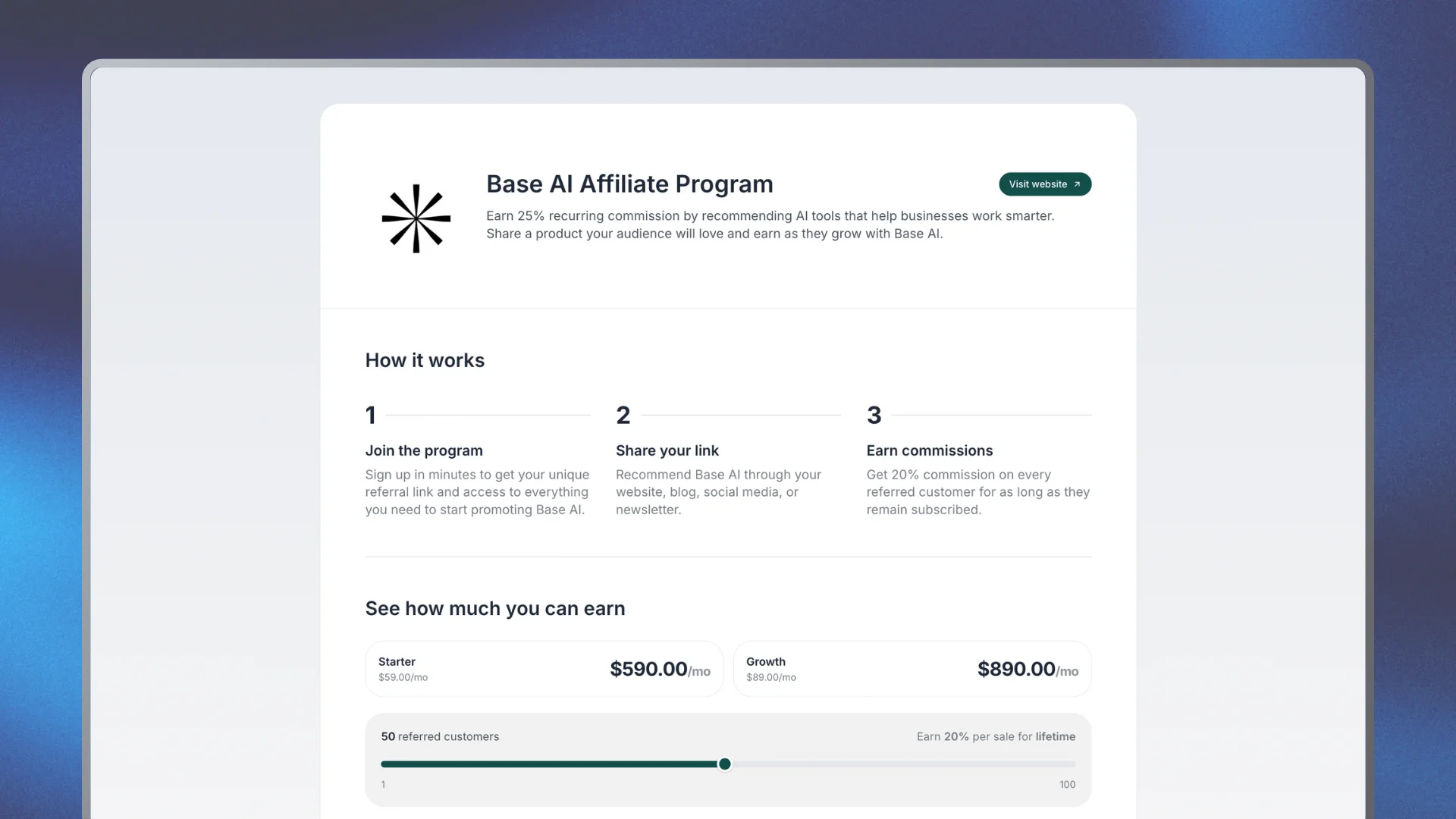
Add an earnings calculator with Partnero
Make your affiliate program more compelling by showing potential partners what they could earn. With Partnero, you can add an interactive earnings calculator or a static earnings table to your program page, customized to your pricing plans and commission structure.
It gives prospective affiliates a clearer picture of the earning potential and helps them decide whether your program is right for them.
Learn more about adding an earnings calculator to your program page.
5. Explain who your affiliate program is for
Not every affiliate program is right for every partner. Make it easy for potential applicants to recognize whether they fit your target audience.
Describe the types of partners you're looking for and the audiences that would benefit from your product.
Depending on your business, suitable partners might include:
- Bloggers and content creators in your industry.
- Influencers with an engaged and relevant audience.
- Product reviewers and comparison websites.
- Consultants and industry experts.
- Agencies and service providers.
- Existing customers who genuinely recommend your product.
You can also mention any specific requirements.
For example, you might be looking for partners who create content about digital marketing, run a business-focused newsletter, or work with small and medium-sized businesses.
If your program is only available in certain countries or regions, make that clear. The same applies to restrictions on promotional channels or types of content.
Being specific helps attract relevant applicants rather than simply maximizing the number of sign-ups.
6. Explain how your affiliate program works
Potential affiliates should be able to understand what happens after they click the sign-up button.
A short, step-by-step explanation can make the process feel much more approachable.
For example:
Step 1: Apply to join
Complete the registration form with basic information about yourself, your website, or your promotional channels.
Step 2: Get approved
Your team reviews the application and confirms whether the applicant is a good fit for the program.
Step 3: Get your referral links and resources
Once approved, affiliates receive access to their partner portal, where they can find their referral links, promotional materials, and program information.
Step 4: Start promoting
Affiliates share their referral links through their websites, social media accounts, newsletters, or other approved channels.
Step 5: Earn commissions
When qualifying referrals generate sales or other rewardable actions, affiliates earn commissions according to your program's terms.
You don't need to explain every technical detail of your tracking system. Focus on giving applicants a clear picture of the journey from registration to their first commission.
If your program requires manual approval, mention that too. Let applicants know whether they can start promoting immediately or need to wait for confirmation.
7. Include a clear call to action and an easy sign-up process
You've explained the opportunity, outlined the benefits, and shown potential earnings. Now make it easy for visitors to take the next step.
Use clear calls to action throughout the page rather than relying on a single button at the bottom.
Good examples include:
- Join our affiliate program
- Become a partner
- Apply now
- Start earning with [Brand]
Each button should lead directly to the relevant registration or application page.
Pay attention to the sign-up process itself. A lengthy application form can discourage people who are genuinely interested in your program.
Ask for the information you actually need to assess applicants, such as their name, email address, website, audience, or promotional channels. Avoid requesting unnecessary details at the initial stage.
If you review applications manually, set expectations about the approval process. A simple message explaining that your team will review the application and get back to the applicant helps create a more professional experience.
8. Add an FAQ section
Even a well-written affiliate program page may leave some questions unanswered.
An FAQ section gives potential partners a place to find additional information without having to contact your team.
Consider answering questions such as:
- Who can join the affiliate program?
- Is there a fee to become an affiliate?
- How much commission can I earn?
- When and how are commissions paid?
- How long does referral tracking last?
- Can I promote the product on social media?
- Are there any promotional restrictions?
- How long does application approval take?
- Where can I find promotional materials?
Keep answers concise and specific to your program.
An FAQ section also helps you address common concerns before they become obstacles to registration. If applicants repeatedly ask your team the same questions, those are good candidates to add to the page.
How to create an affiliate program page with Partnero
Once you've planned your content, you need a place to build and publish it.
With Partnero, you can create a dedicated program page within your partner portal. It's a customizable landing page designed to introduce your affiliate program, highlight its benefits, and guide potential partners toward registration.
Your program page is hosted on the same domain as your partner portal. For example, if your portal is available at partners.company.com, your program page will use the URL partners.company.com/program.
Here's how to set it up.
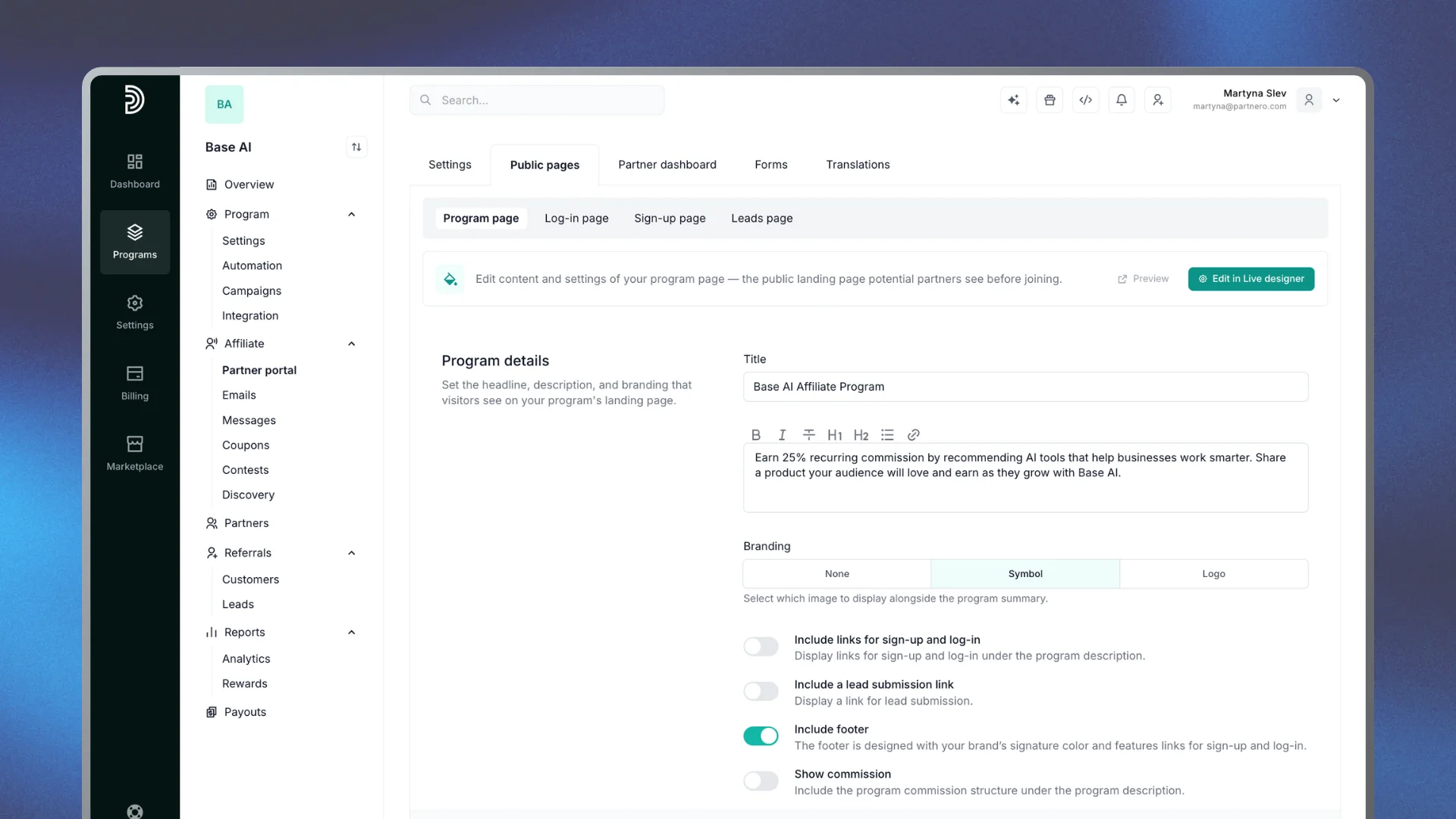
1. Open your program page settings
In your Partnero account, go to Partner portal → Public pages and select Program page. Add your program name and description, then choose which details to display, such as sign-up and log-in links, your commission structure, and a footer.
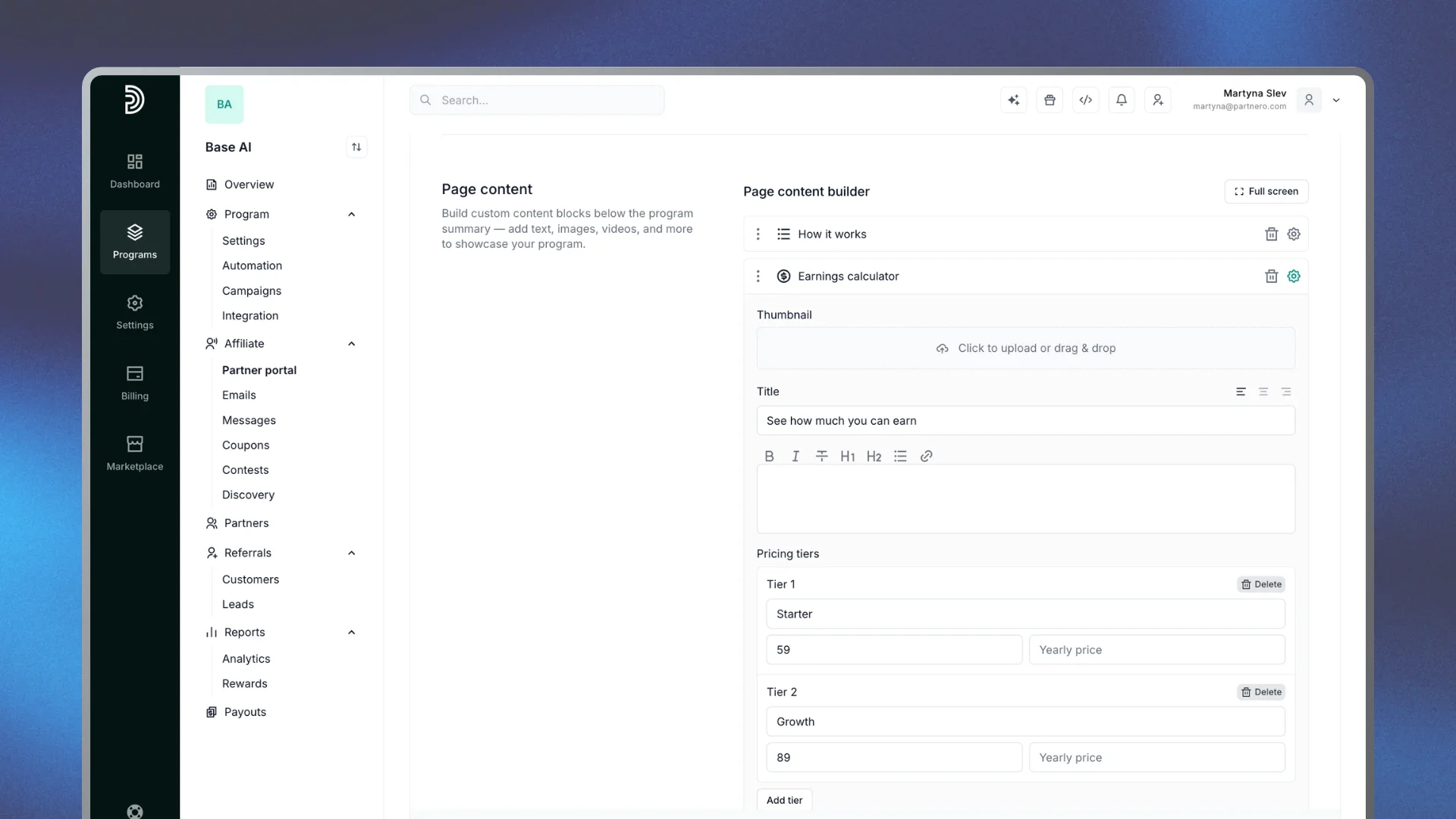
2. Build your page content
Under Page Content, you can add different types of resources to organize your information.
Available options include:
- Universal sections.
- Content sections.
- Images.
- Text.
- Buttons.
- Accordions and FAQs.
- Links.
- Dividers.
- How-it-works sections.
- Custom code.
- Earnings calculators.
Use these resources to create a page that covers your program introduction, commission structure, benefits, partner requirements, and registration process.
You don't have to use every available resource. Choose the elements that help communicate your offer most effectively.
3. Customize the page design
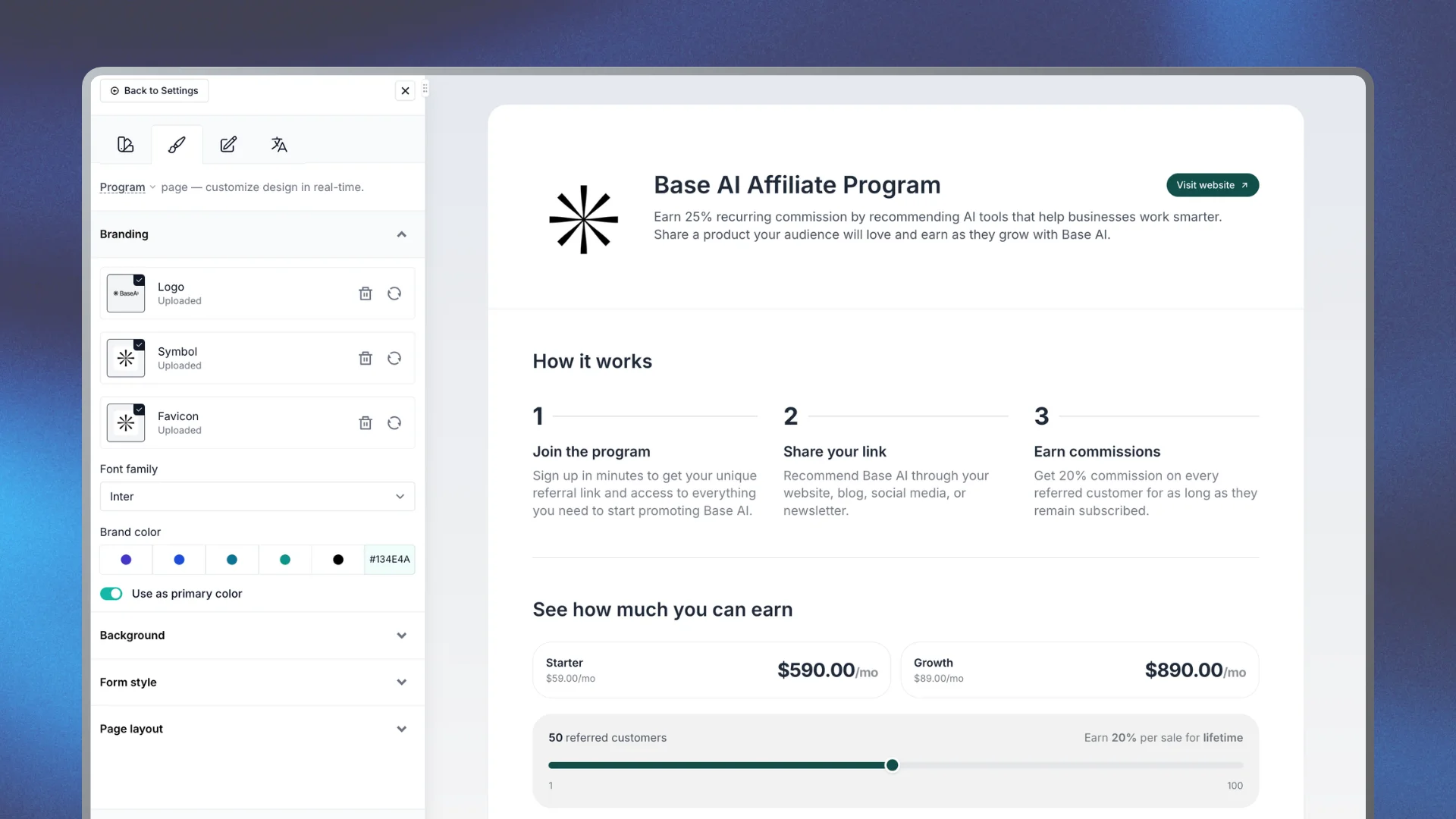
Partnero's Live Designer lets you edit your program page's appearance and content while previewing the changes in real time.
You can adjust colors, layouts, and other design elements, as well as apply a pre-designed theme.
You can also edit content directly through the designer, making it easier to see how different sections work together.
Aim for a clean, consistent design that reflects your main website. Use your brand colors, logo, and visual assets to make the experience recognizable.
4. Preview and publish your page
Before publishing, review the page from the perspective of someone who has never heard of your affiliate program.
Check that:
- Your offer is immediately understandable.
- Commission details are accurate.
- All links and buttons work.
- Your application process is clear.
- The page looks good on different screen sizes.
- There are no outdated terms or missing details.
Once you're happy with the result, save your changes and share your program page with potential partners.
For more detailed instructions, see Partnero's guide to creating a program page.
How to get more potential affiliates to your program page
Creating a great affiliate program page is only half the job. You also need to make sure potential partners can find it.
Here are a few ways to promote your page and attract relevant applicants.
Add it to your website navigation and footer.
Make your affiliate program easy to discover. Add a link to your website footer or navigation menu so visitors who are already familiar with your brand can find the opportunity.
Link to it from relevant blog articles.
If you publish content about your industry, products, or services, consider adding a contextual link to your affiliate program page. Readers who already understand your product may be interested in recommending it to their audiences.
Include it in recruitment emails.
When reaching out to potential affiliates, don't make them search for your program details. Link directly to your program page so they can review the offer, understand the requirements, and apply.
Promote it on social media.
Share your affiliate program through your company's LinkedIn, Instagram, X, or other relevant social media accounts. Focus on the benefits of joining and the types of partners you're looking for.
Use targeted advertising.
If you have a clear idea of your ideal affiliate audience, paid search and social campaigns can help you reach people who are likely to be interested in your program.
Make sure your ads lead directly to your program page and that the message matches the offer visitors see when they arrive.
Reach out to potential partners directly.
Identify bloggers, creators, publishers, and industry professionals whose audiences align with your product. Personalized outreach can be more effective than broad recruitment messages because you can explain why the partnership makes sense for them.
How to measure the performance of your affiliate program page
Publishing your page doesn't mean the work is finished. Like any recruitment channel, it needs to be reviewed and improved over time.
Start by looking beyond the total number of visitors. Traffic is useful, but it doesn't necessarily mean you're attracting the right partners.
Here are some metrics worth monitoring:
- Page visits: How many people are visiting your program page?
- Application rate: What percentage of visitors complete the registration process?
- Application quality: Are applicants relevant to your business and target audience?
- Approval rate: How many applications meet your program requirements?
- Activation rate: How many approved partners actually start promoting your product?
- Partner performance: Are new partners generating clicks, referrals, customers, and commissions?
For example, if your page attracts plenty of visitors but very few applications, your offer may not be compelling enough, or visitors may not understand what joining involves.
If applications are frequent but most are unsuitable, you may need to be more specific about your ideal partners and eligibility requirements.
If approved affiliates aren't starting to promote, the issue may be with your onboarding experience rather than the recruitment page itself.
Review the page whenever your commission structure, product offering, or partner requirements change. Keeping the information accurate is essential for building trust.
Affiliate program page checklist
Before sharing your page, use this checklist to make sure you've covered the essentials.
- A clear headline explaining the affiliate opportunity.
- A short introduction to your company and product.
- An explanation of who the program is for.
- Transparent commission rates and earning conditions.
- Information about payment schedules and minimum thresholds.
- A clear explanation of partner benefits.
- An overview of how the program works.
- An earnings calculator or example of potential commissions.
- Information about eligibility and promotional restrictions.
- A visible sign-up or application button.
- An easy-to-complete registration process.
- An FAQ section addressing common questions.
- Consistent branding and a mobile-friendly design.
- Working links and up-to-date program information.
You don't necessarily need every element on every page, but the more clearly you communicate your offer, the easier it becomes for potential partners to decide whether they want to join.
Create an affiliate program page that attracts the right partners with Partnero
Your affiliate program page is more than a place to announce that you're accepting applications. It's an opportunity to show potential partners why working with your business is worthwhile.
Focus on what matters most to applicants: a product they can confidently recommend, a transparent commission structure, meaningful benefits, and a straightforward path to joining.
With Partnero, you can create a dedicated, customizable program page within your partner portal, add content and FAQs, showcase your commission structure, and include an earnings calculator to demonstrate potential rewards.
Whether you're launching your first affiliate program or looking to improve recruitment for an existing one, a well-organized program page can help you attract more relevant partners and give them a clearer reason to get involved.
Create your affiliate program with Partnero.
FAQs
An affiliate program page is a landing page that introduces a business's affiliate program to potential partners. It explains the program's benefits, commission structure, eligibility requirements, and application process, encouraging relevant people to join.
An effective affiliate program page should include a clear program introduction, commission details, partner benefits, eligibility requirements, an explanation of how the program works, a sign-up button, and an FAQ section. An earnings calculator can also help visitors understand their potential commissions.
Start by defining your ideal partners and the benefits of joining your program. Prepare clear information about your product, commission structure, payment terms, and application process. Then build a dedicated landing page using your website's page builder or an affiliate management platform such as Partnero.
Yes. Displaying commission rates and explaining how rewards work helps potential partners evaluate your offer. Include important details such as whether commissions are recurring or one-time, how long they last, and when payments are made.
Offer a competitive and transparent commission structure, provide useful promotional resources, explain the benefits of your product, and make the application process straightforward. An earnings calculator can also help potential affiliates visualize what they could earn from successful referrals.
Yes. You don't need a separate website to promote your affiliate program. With Partnero, you can create a dedicated program page within your partner portal, customize its content and design, and share its URL with potential partners.
Launch your program in minutes or get in touch for advanced setups.
Fast setup & easy migration
Connect Partnero to your tools, with support if you’re switching platforms.Automated, transparent payouts
Pay partners on schedule and save hours. No spreadsheets or manual errors.
Affiliate and referral program software trusted by 1,500+ businesses. Connect with Stripe, Paddle, Shopify and more.

Product updates, affiliate marketing tips, and growth insights.