How to set up and run a SaaS affiliate program

81% of brands run affiliate programs, including SaaS companies. SaaS affiliate marketing pays partners a share of recurring subscription revenue, not a one-time payout per sale. An affiliate refers a customer, the customer subscribes, and the affiliate earns commission for as long as the subscription runs, or for a defined period after signup.
That single difference, recurring revenue instead of a one-time transaction, is why SaaS affiliate programs need different commission structures, tracking, and payout mechanics than an ecommerce program built around single purchases.
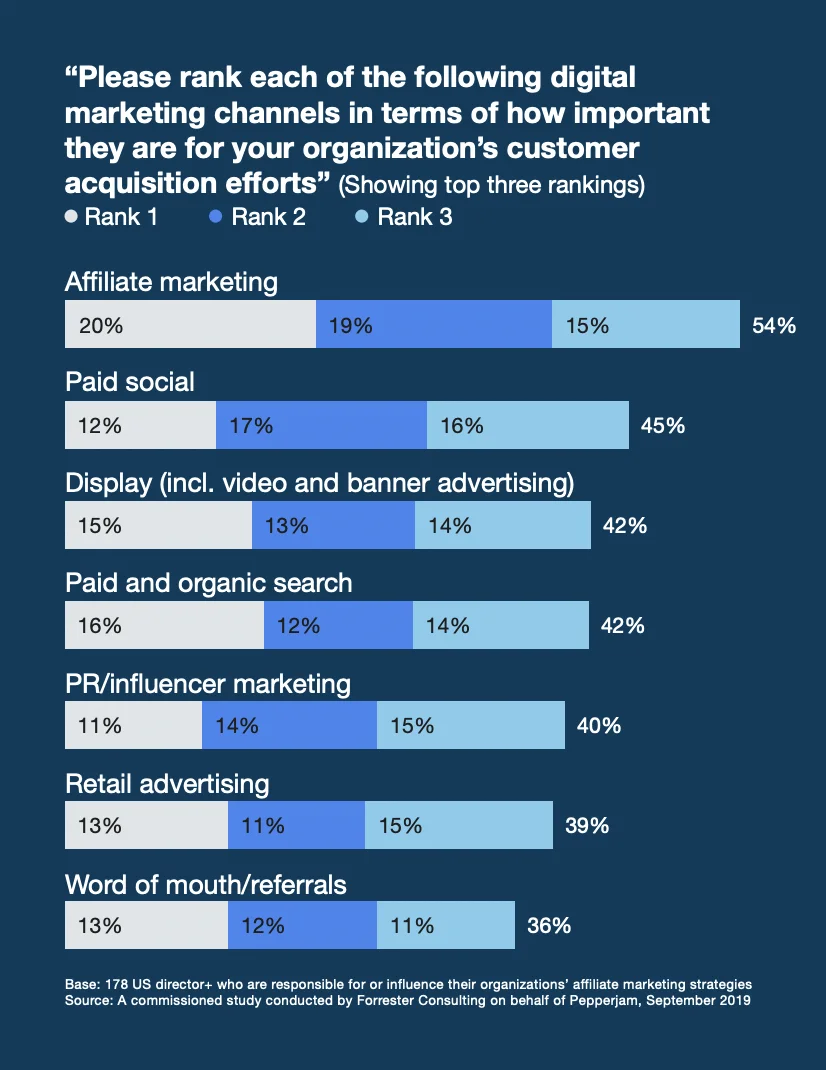
Most successful marketing channels for brand marketers (Source: Pepperjam)
Why run a SaaS affiliate program
Affiliate marketing is part of a $12 billion industry, and it's one of the lowest-risk growth channels available: you only pay a commission after a sale happens, unlike paid ads, where you pay for every click regardless of outcome. Here are some of the benefits an affiliate program brings.
1. Generates targeted leads and better SEO
Affiliates promote to audiences already likely to be interested in your product and often target customers in a specific geographic area, which sharpens that targeting further. Affiliate content also tends to generate backlinks, which can improve organic search visibility over time.
2. Builds trust and credibility
A recommendation from an affiliate an audience already trusts converts better than a cold ad. Shopify's affiliate program is a well-known example, built largely by partnering with influencers and bloggers who already had engaged, relevant audiences.
3. Can meaningfully move revenue
HubSpot's affiliate program generated over 15% of its total revenue in a single year, a useful benchmark for how significant this channel can become once it's running well, not just a minor side effort.
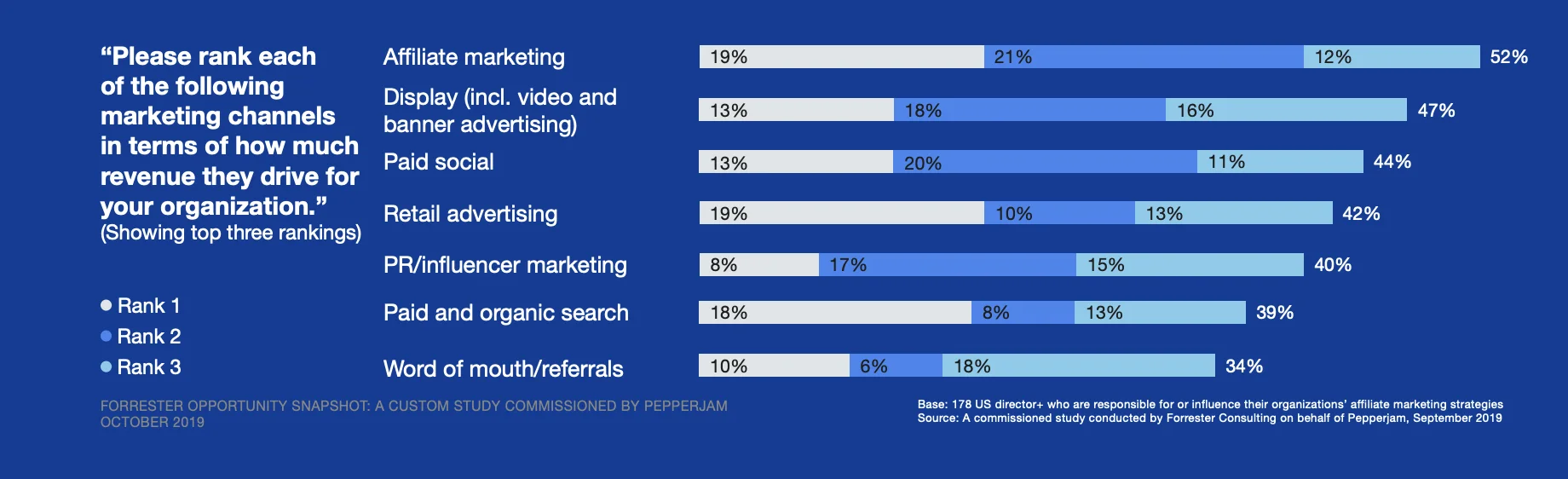
Revenue based on marketing channel (Source: Pepperjam)
How to launch a SaaS affiliate program, in short
The setup mechanics in six steps. For the strategy behind each one, competitor benchmarking, partner agreements, and KPIs to track, see the full walkthrough below.
- Research your competitors. Check whether your competitors run an affiliate program and what they're offering.
- Decide on structure & rates. Rate, model (recurring, first-sale-plus, tiered), and length of the commission window.
- Ensure distinct branding. A white-label, feature-rich portal can make the program easier to promote and easier to trust.
- Choose & keep affiliate partners at the forefront. Direct outreach, or AI-assisted discovery to find affiliates who already reach your audience, plus ongoing communication.
- Automate payouts. PayPal, Wise, or hand off payout processing entirely.
- Track, monitor & manage. Partner, link, and revenue reporting to see what's working and adjust as the program matures.
How SaaS commission structures work
Commission rates for SaaS affiliate programs typically fall between 20% and 50%, though the structure behind the number matters more than the number itself. Three models cover most programs:
Model | How it works | Best for |
Recurring commission | Affiliate earns a percentage of the subscription payment for a fixed window (3, 6, or 12 months) or the customer's full lifetime | Programs prioritizing long-term partner incentives |
First-sale plus reduced recurring | Higher one-time rate on the first payment, lower ongoing percentage after | Balancing upfront recruiting cost against long-term margin |
Tiered / performance-based | Base rate increases as an affiliate hits volume or revenue thresholds | Rewarding top performers without raising cost for low-activity partners |
What to decide before you launch:
- Percentage of revenue or flat fee per signup
- Fixed window vs. lifetime commission
- Whether refunds and failed payments claw back commission automatically
- Whether commission varies by plan or product tier
If you're setting this up on affiliate management tools like Partnero, commission tools handle percentage, flat, product-based, and tiered models on any plan, and the AI program builder can suggest a starting structure.
How tracking and attribution work for subscription revenue
Ecommerce attribution stops at the sale. SaaS attribution has to stay connected to the customer for the life of the subscription, which means syncing with your billing platform, not just a cookie on a checkout page.
A platform built for this connects directly to Stripe or Paddle, so signups, renewals, upgrades, downgrades, and refunds are tracked automatically, with commission calculated on revenue actually collected. Refunded or failed payments should be detected and deducted automatically; otherwise you end up paying commission on money you never kept.
Referrals can be attributed through tracking links, coupon codes, or custom events, and combining link and code tracking gives more flexibility than cookies alone.
Case study: how SimpleCheck built a program that mostly runs itself
SimpleCheck, a lead qualification tool for high-ticket sales teams, is a real example of the commission and tracking models above in practice.
Two problems SimpleCheck had to solve that a generic affiliate guide won't cover:
Usage-based billing. SimpleCheck bills on consumption, not a flat subscription, which normally breaks commission tracking built for fixed-price plans. Co-founder Grant Eilertson found the reconciliation worked without custom engineering on their end.
Multi-tier referral networks. SimpleCheck's affiliates often refer other affiliates (an agency refers a coaching client, who refers their own network), which requires tracking commission across layers, not just a single referrer.
The result: affiliates now account for roughly 68% of SimpleCheck's total revenue over the past 12 months, with the program requiring minimal day-to-day management.
Read the full SimpleCheck story →
How to launch a SaaS affiliate program
1. Research your competitors
Check whether your competitors run an affiliate program and what they're offering. Your program needs to be competitive, if you offer a 5% commission while competitors offer 30%, affiliates will simply go where the money is.
2. Decide on structure & rates
Use the commission models above (recurring, first-sale-plus-recurring, or tiered) to pick a structure that fits your margins and goals. Beyond the rate itself, decide on cookie duration, whether the program is open or requires approval, and whether top-performing affiliates get bonuses on top of standard commission.
3. Ensure distinct branding
Give affiliates the resources to promote you well: banner ads, email templates, social media posts, and ideally custom landing pages per affiliate or campaign, which both improve conversions and make it easier to track which affiliate drove which result. A feature-rich, white-label affiliate portal makes the whole program easier to promote and easier for affiliates to trust.
Further reading: Affiliate Marketing Assets: The Ultimate Guide for Growing Your Program
4. Choose & keep affiliate partners at the forefront
Roughly 20% of affiliates typically drive 80% of results, so recruit deliberately. Look for affiliates with a relevant, engaged audience and a good reputation, not just reach, through direct outreach or AI-assisted discovery to find partners who already reach your audience. Don't overlook your existing customers either; some of your best affiliates are likely already using and recommending the product; they just need an invitation to formalize it. Once partners are on board, put an affiliate agreement in place so expectations are clear on both sides, then keep in regular contact, update them on promotions, product changes, and their own performance. Support and responsiveness are what turn a signed-up affiliate into an active one.
Further reading: How to Find Affiliate Partners with AI and Manage Outreach Without Losing Track
5. Automate payouts
Once commissions are earned, you need a reliable way to pay them out. Decide on a payout schedule and minimum threshold upfront; most SaaS programs pay monthly, with a small minimum balance required before a payout triggers. You can pay affiliates directly through PayPal or Wise on your own schedule, or hand off payout processing entirely and have it consolidated into a single automated charge, no manual reconciliation required either way. Whichever route you choose, make sure payout status is visible to affiliates in their portal; uncertainty about when or whether they'll get paid is one of the fastest ways to lose an otherwise engaged partner.
6. Track, monitor & manage
An affiliate program isn't a set-and-forget channel. Track clicks, conversions, and commissions on an ongoing basis, and use that data to adjust rates, refresh marketing materials, and double down on what's converting. Testing and optimizing landing pages with your partners over time tends to matter more than the initial setup.
Further reading: How to Measure Affiliate Program Performance (The Metrics That Actually Matter)
Ready to launch your affiliate program? See how Partnero handles commissions, tracking, and payouts for SaaS.
FAQ
Ecommerce-focused tools are built to track single, one-time purchases, not ongoing subscription revenue. Partnero is built around subscription billing, syncing directly with Stripe and Paddle to track renewals, upgrades, downgrades, and refunds automatically, which recurring-commission SaaS programs depend on.
Most SaaS affiliate programs pay between 20% and 50% commission. The right rate depends on your margins and customer lifetime value, not just what competitors advertise.
Percentage of revenue is more common for SaaS because it scales with the customer's plan and usage. Flat fees are simpler to run but don't reward affiliates for referring higher-value customers.
Recurring commission aligns affiliate incentives with retention, since the affiliate keeps earning only while the customer stays subscribed. One-time bounties are simpler to budget but reward signups, not long-term customers.
Common windows are 3, 6, 12, or 24 months, or the customer's full lifetime, depending on how much upfront recruiting incentive you want to offer.
Tracking connects directly to your billing platform so signups, renewals, upgrades, and refunds sync automatically. Commission is calculated on revenue actually collected, not the initial invoice amount.
A platform built for subscriptions detects refunds and cancellations and adjusts commission automatically, so you don't end up paying commission on revenue you never kept.
Most SaaS programs use 30 to 90 day cookie windows, though link and coupon-code tracking can extend attribution beyond what cookies alone capture.
An affiliate program recruits people with an existing audience, like creators or bloggers, to promote your product to their followers. A referral program rewards your own existing customers for referring people they know personally.
Look for native subscription billing integration, transparent pricing without revenue caps, and automated payouts. For SaaS specifically, recurring commission logic and refund handling matter more than they do for ecommerce-focused tools.
Launch a SaaS affiliate program today with Partnero
Remember to choose the right affiliates. Provide them with regular communication and support. Monitor your performance data to optimize your program for success. Sign up for Partnero today. 30 days free, no credit card required.
Launch your program in minutes or get in touch for advanced setups.
Fast setup & easy migration
Connect Partnero to your tools, with support if you’re switching platforms.Automated, transparent payouts
Pay partners on schedule and save hours. No spreadsheets or manual errors.
Affiliate and referral program software trusted by 3,000+ businesses. Connect with Stripe, Paddle, Shopify and more.


Product updates, affiliate marketing tips, and growth insights.